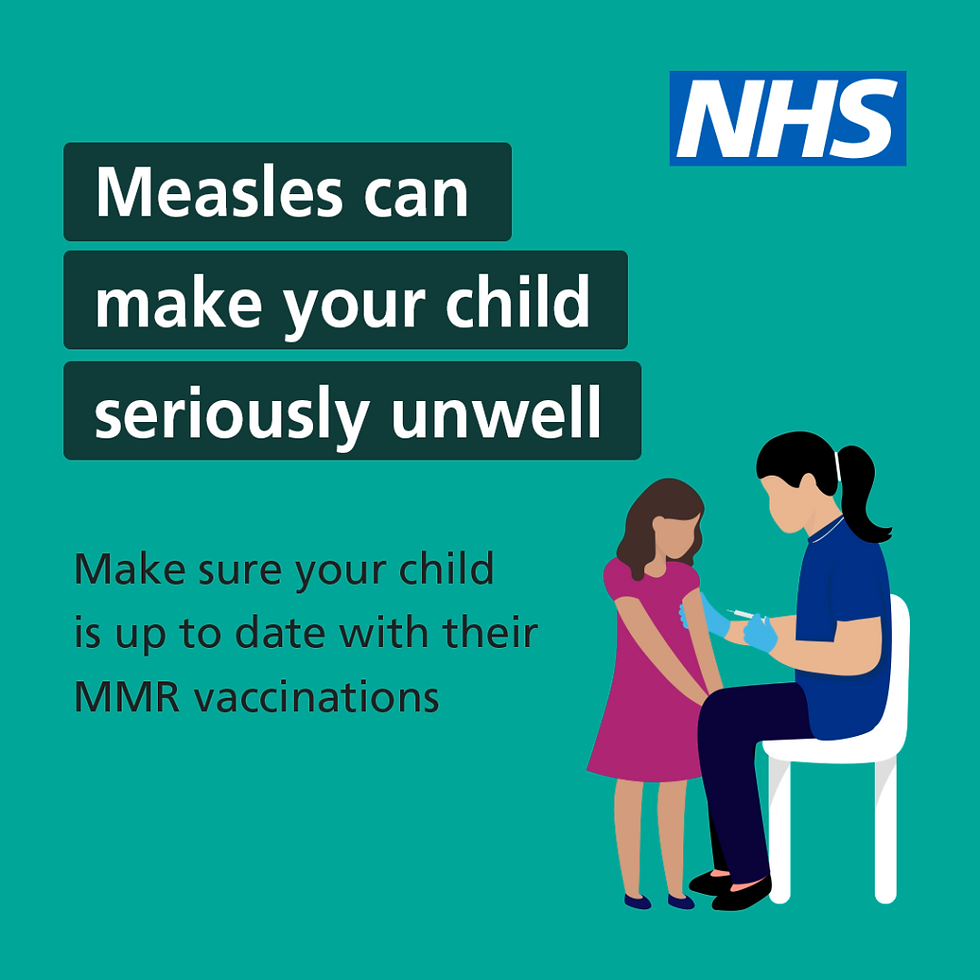
Measles cases rising in London: check your child’s vaccinations

Measles cases have been rising in London since January, with several outbreaks reported in parts of the city. Most of the children who have caught measles recently had not received the MMR or MMRV vaccine.
Because measles spreads very easily, schools and nurseries can see outbreaks when vaccination levels fall.
The Public Health team at Lewisham Council have asked local organisations like Besson Street Trust to help share important information to help local parents and carers stay informed and keep children safe.
What is measles?
Measles is a very infectious illness that spreads easily through coughing, sneezing and close contact.
It often starts like a cold before the rash appears. While many children recover, measles can sometimes cause serious complications.
Around 1 in 5 children who get measles need hospital care (NHS England), and in rare cases it can lead to conditions such as pneumonia, meningitis or seizures.
The good news is that vaccination provides very strong protection.
Symptoms to look out for (source: NHS website)
Measles usually begins with symptoms that look like a cold. According to the NHS, the most common signs are:
Early symptoms
High temperature (fever)
Runny or blocked nose
Cough
Red or watery eyes
Sneezing
Spots in the mouth
Small white spots may appear inside the cheeks and on the back of the lips a few days later. These spots usually last a few days.
Later symptoms
A red or brown rash, usually starting on the face and behind the ears before spreading to the rest of the body
If your child develops these symptoms, it’s best to seek advice.
What to do if you think your child has measlesIf you think your child may have measles:
This helps prevent the illness spreading to others, especially babies, pregnant women, and people with weakened immune systems. More information about measles symptoms and treatment can be found on the NHS website:https://www.nhs.uk/conditions/measles/ |
Check your child’s vaccination
These are usually given at 12 months and 18 months of age.
Nearly all children who have recently developed measles had not received the vaccine.
If you’re not sure whether your child has had both doses, you can check by:
Looking in your child’s Red Book
Checking the NHS App
Asking your GP surgery
If a dose has been missed, you can arrange a free vaccination appointment through your GP or the school immunisation service.
Helping protect our community
Vaccination protects not only your own child but also others in the community who may be more vulnerable to infection.
If you’re unsure about your child’s vaccination status, it’s worth taking a moment to check.
A small step can help keep families across New Cross and Lewisham healthy and protected.


What stood out was the overlap section. The post at https://webugol.com/blog/exploring-the-distinctions-social-marketing-vs-commercial-marketing/ notes shared tools — advertising, branding, research, storytelling, multi-platform promotion — even though goals differ. Both rely on audience insight and measurable outcomes. The distinction still matters for marketers customizing campaigns, organizations aligning strategy with mission or profit, and society understanding how messaging shapes habits. Helpful when CSR or cause campaigns sit next to product launches.
I found this article useful when I was trying to understand osteochondral defects and the treatment options available. The information https://ways2well.com/blog/osteochondral-defect-treatment-what-are-your-options is presented in a clear way, making it easier to understand how cartilage and the underlying bone can be affected. I liked that the article discusses different approaches, from conservative treatment and physical therapy to procedures that may be considered for more significant damage. The section about regenerative medicine was also interesting and gave me some useful topics to discuss with a specialist.
Regional parents across New Cross definitely understand how crucial maintaining a safe and healthy home environment is for young children this year. While upgrading bright indoor nursery spaces or organizing children playrooms near large south facing window panes, families can order specialized UV protection layers from https://www.tintfit.com/shop/uv-protection to block harsh solar rays.